
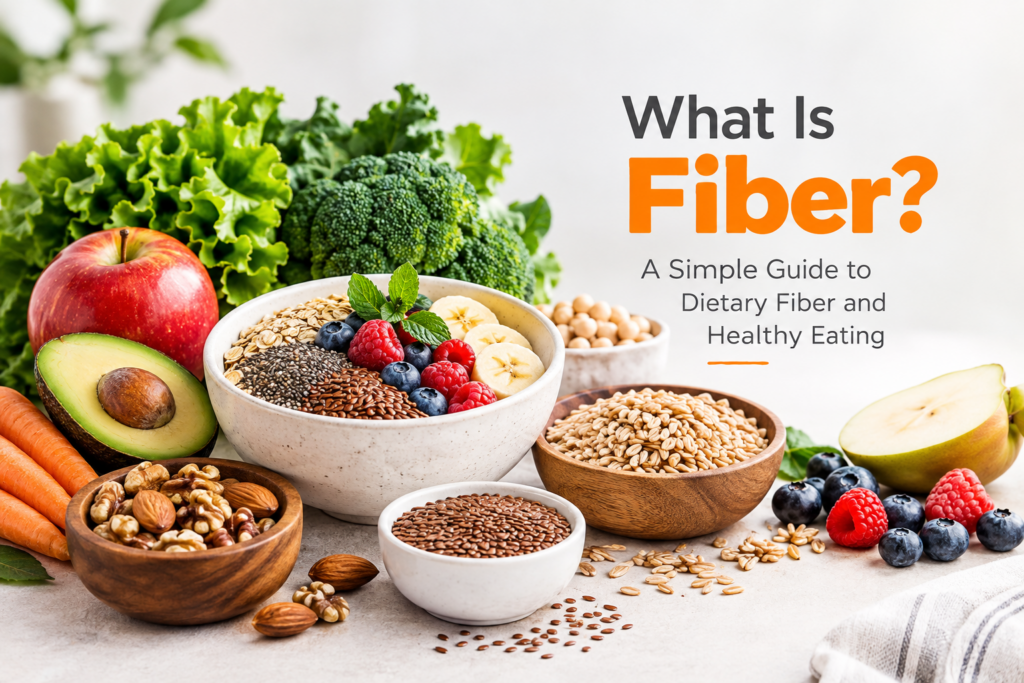
Have you ever wondered why foods like oats, fruits, vegetables, beans, and whole grains are often part of a healthy diet?
One reason is dietary fiber.
Fiber is a type of carbohydrate found mainly in plant foods. Unlike many other carbohydrates, your body does not fully digest fiber.
Fiber is an important part of a balanced eating pattern. It can be found in many everyday foods, so adding more fiber does not have to be difficult.
In this guide, we will explain what fiber is, why it matters, which foods contain it, and simple ways to include more fiber in your meals.
What is Fiber?
Dietary fiber is found naturally in plant foods.
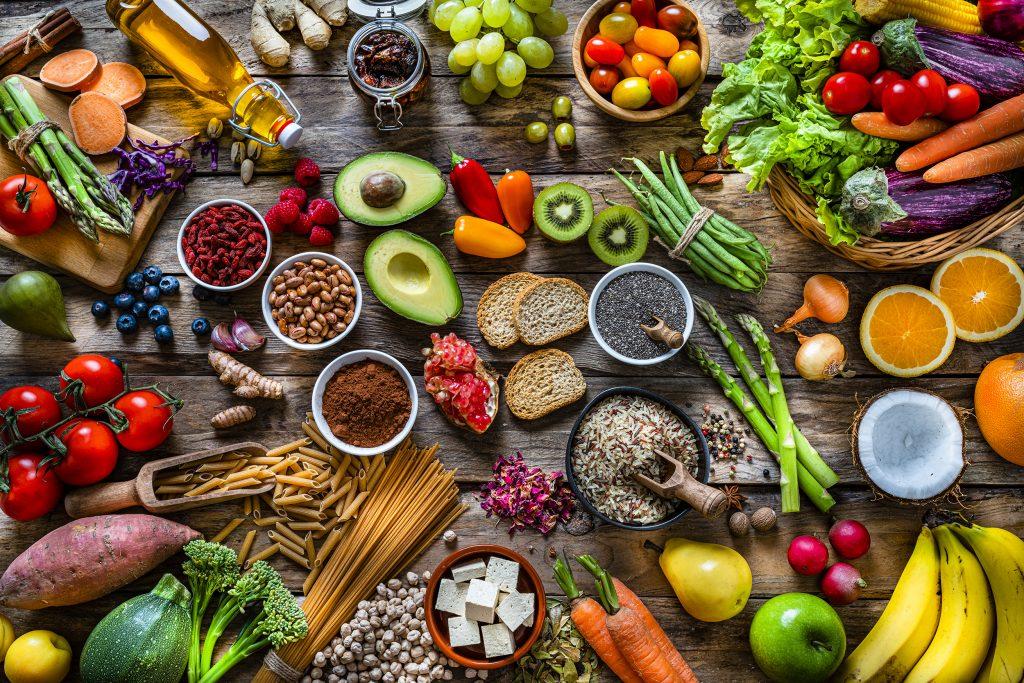
Good sources include:
- Fruits
- Vegetables
- Whole grains
- Beans
- Lentils
- Chickpeas
- Nuts
- Seeds
Fiber passes through parts of the digestive system without being fully broken down.
There are different types of fiber, and they can have different effects in the body.
The simplest way to remember this is:
Fiber is a plant-based part of food that supports a healthy diet and normal digestion.
Why Is Fiber Important?
Fiber is an important part of good nutrition.
A diet that includes enough fiber can support:
- Normal digestion
- Regular bowel movements
- A healthy digestive system
- A balanced eating pattern
Fiber-rich foods can also provide other useful nutrients.
For example, an apple provides fiber along with vitamins and other plant compounds. Beans provide fiber as well as protein and minerals.
This is one reason whole and minimally processed plant foods can be valuable parts of a balanced diet.
What Are the Main Types of Fiber?
Fiber is often grouped into two main types: soluble fiber and insoluble fiber.
Soluble Fiber
Soluble fiber dissolves in water and forms a gel-like material in the digestive system.
It is found in foods such as:
- Oats
- Barley
- Beans
- Lentils
- Apples
- Citrus fruits
- Some seeds
Soluble fiber is one part of a healthy eating pattern.
Insoluble Fiber
Insoluble fiber does not dissolve in water.
It helps add bulk to stool and supports normal bowel movement.
Good sources include:
- Whole grains
- Wheat bran
- Nuts
- Seeds
- Many vegetables
- Potato skins
Many foods contain a mixture of different types of fiber.
You do not need to count each type separately. Eating a variety of plant foods is a simple approach.
How Much Fiber Do You Need?
Fiber needs vary based on factors such as age, sex, and overall calorie needs.
For many adults, general nutrition guidance suggests getting around 25–30 grams of fiber per day, although individual needs can differ.
Instead of worrying about hitting an exact number every day, focus on eating a variety of fiber-rich foods regularly.
For example, you could include:
Breakfast: Oatmeal with berries and chia seeds
Lunch: Lentils with vegetables and whole-grain roti
Snack: An apple with a small handful of nuts
Dinner: Beans, brown rice, and mixed vegetables
These foods can add fiber throughout the day.
Best High-Fiber Foods
You do not need special products to get fiber.
Many affordable foods are naturally rich in fiber.
Fruits
Good choices include:
- Apples
- Pears
- Oranges
- Berries
- Guava
- Bananas
- Kiwi
When suitable, eating whole fruit instead of drinking fruit juice can provide more fiber.
Vegetables
Try adding:
- Broccoli
- Carrots
- Green peas
- Spinach
- Cauliflower
- Sweet potatoes
- Green beans
Different vegetables provide different nutrients, so variety is helpful.
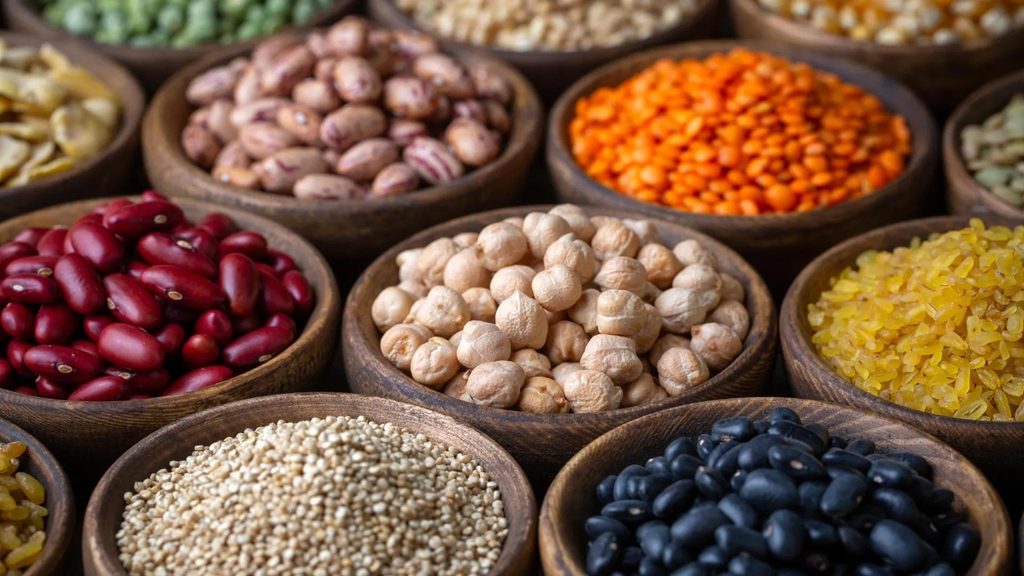
Beans and Lentils
Beans, chickpeas, and lentils are excellent foods to include in a balanced diet.
They provide fiber and can also provide protein and minerals.
Whole Grains
Examples include:
- Oats
- Brown rice
- Barley
- Whole-grain bread
- Whole-grain pasta
Whole grains contain more of the natural grain than refined grains.
Nuts and Seeds
Nuts and seeds can provide fiber along with healthy fats, protein, vitamins, and minerals.
Examples include:
- Almonds
- Walnuts
- Chia seeds
- Flaxseeds
- Pumpkin seeds
How to Add More Fiber to Your Diet
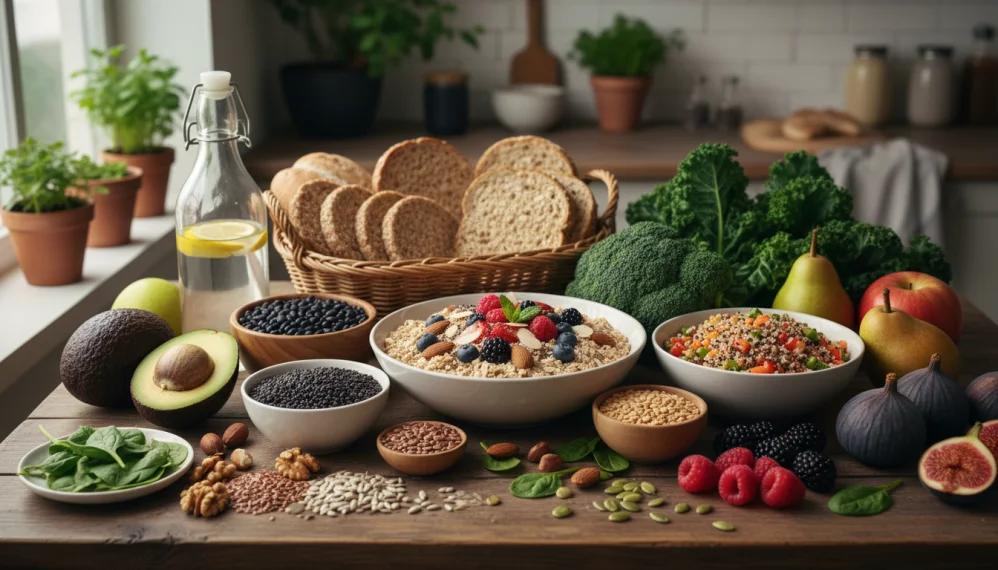
Increasing fiber can be simple.
1. Start Your Day With Oats
Oatmeal is an easy breakfast option.
Add berries, banana, chia seeds, or nuts for extra variety.
2. Choose Whole Fruits
Have an apple, pear, orange, or berries as a snack.
Whole fruit usually provides more fiber than fruit juice.
3. Add Beans to Meals
Add beans or chickpeas to salads, rice dishes, soups, or wraps.
4. Choose Whole Grains
Try replacing some refined grain foods with whole-grain options.
For example, choose oatmeal or whole-grain bread when it fits your diet.
5. Add Seeds
Chia, flax, and pumpkin seeds can be added to oatmeal, yogurt, smoothies, or salads.
6. Eat More Vegetables
Add a vegetable to lunch and dinner.
Even small changes can increase your overall fiber intake.
Increase Fiber Slowly
If you currently eat very little fiber, do not suddenly add a large amount.
Increase it gradually.
A sudden increase may cause:
- Gas
- Bloating
- Stomach discomfort
Drinking enough fluids is also important when increasing fiber.
Your body may need time to adjust to a higher-fiber eating pattern.
If you have a digestive condition or ongoing digestive symptoms, speak with a qualified healthcare professional before making major changes to your diet.
Fiber and Protein: Why Both Matter
Fiber and protein are different nutrients, but both can be part of a balanced meal.
For example, you could combine:
Oats + Greek yogurt + berries + chia seeds
This meal provides protein from yogurt and fiber from oats, berries, and seeds.
Another option could be:
Lentils + brown rice + vegetables
This provides fiber along with plant-based protein and carbohydrates.
A balanced diet is about combining different nutritious foods rather than focusing on just one nutrient.
If you want to learn more about healthy nutrition, check out our (Nutrition Guide) https://wellnesscarts.com/blogs/
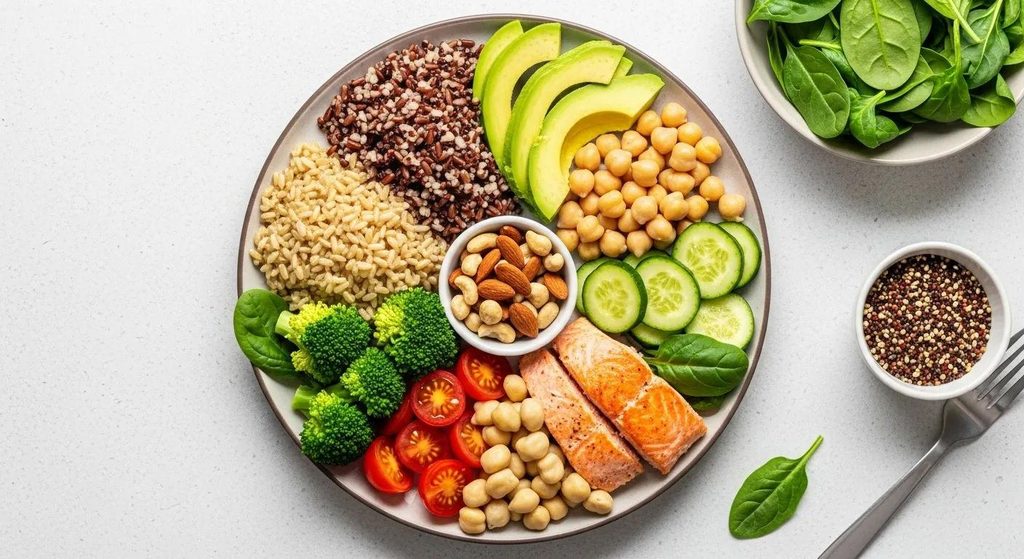
Is Fiber Important for People Who Exercise?
Yes. Fiber can be part of a healthy diet for active people too.
Foods such as oats, fruits, vegetables, beans, whole grains, nuts, and seeds can provide fiber along with other nutrients.
However, the timing of high-fiber foods may matter for some people.
A large high-fiber meal right before intense exercise may cause stomach discomfort for some individuals.
You may prefer to eat larger amounts of fiber at other times of the day and choose foods that feel comfortable before exercise.
Individual needs can vary.
Can Supplements Provide Fiber?
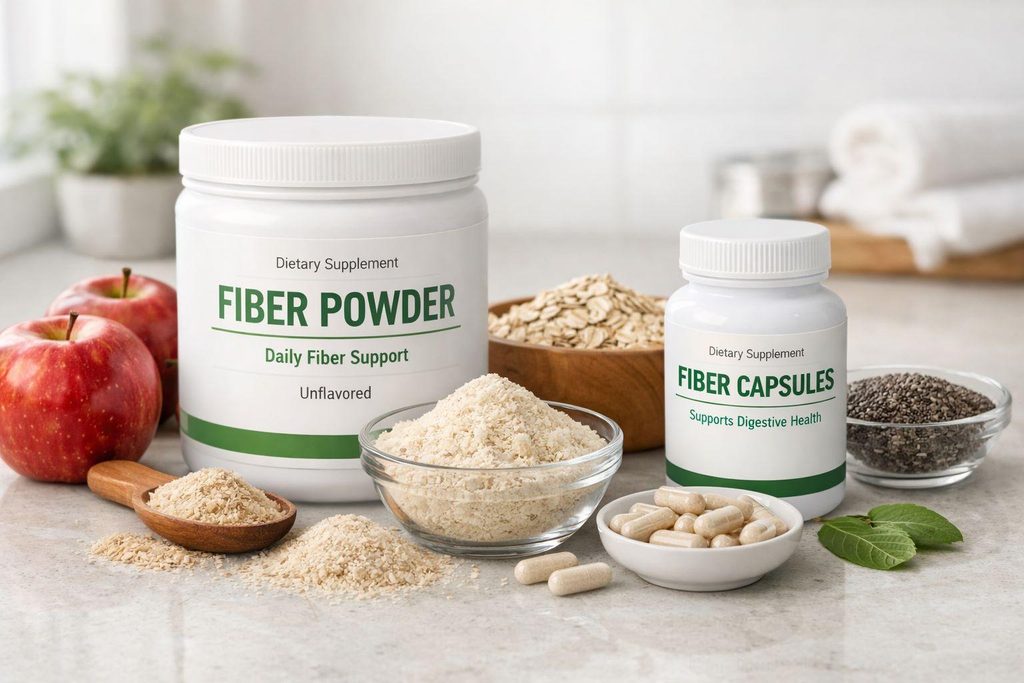
Yes, fiber supplements are available.
They may contain different types of fiber and come in forms such as:
- Powders
- Capsules
- Tablets
- Chewable products
However, fiber supplements should not automatically replace fiber-rich foods.
Whole foods provide fiber along with other nutrients.
If you are considering a fiber supplement, read the label carefully and follow the directions.
If you have ongoing digestive problems, take medication, or have a medical condition, speak with a healthcare professional before starting a fiber supplement.
Common Fiber Mistakes
Eating too little fiber
Many people do not include enough fruits, vegetables, whole grains, beans, and seeds.
Try adding one more fiber-rich food to your meals.
Increasing fiber too quickly
A sudden increase can cause digestive discomfort.
Increase fiber gradually.
Forgetting about fluids
Drink enough fluids as part of a healthy eating pattern, especially when increasing fiber intake.
Relying only on supplements
Whole foods should remain an important part of your diet.
Eating only one type of fiber-rich food
Variety is better. Include different fruits, vegetables, grains, beans, nuts, and seeds.
A Simple High-Fiber Day
Here is one example of how fiber-rich foods can fit into a normal day.
Breakfast
Oatmeal with:
- Berries
- Banana
- Chia seeds
- Yogurt
Lunch
- Lentils
- Brown rice
- Mixed vegetables
- Salad
Snack
- Apple
- Small handful of almonds
Dinner
- Chickpeas or beans
- Whole-grain roti
- Cooked vegetables
- Yogurt
This is only an example. Your food choices should fit your preferences, culture, budget, and individual nutrition needs.
FAQs About Dietary
What is dietary fiber?
Dietary fiber is a type of carbohydrate found mainly in plant foods. Your body does not fully digest it.
What foods are high in fiber?
Fruits, vegetables, beans, lentils, whole grains, nuts, and seeds are all good sources of dietary fiber.
How much fiber should I eat each day?
Many adults are advised to aim for roughly 25–30 grams of fiber per day, but individual needs vary.
Is fruit a good source of fiber?
Yes. Whole fruits such as apples, pears, berries, oranges, and guava can provide fiber.
Are oats high in fiber?
Oats are a good source of fiber and can be an easy addition to breakfast.
Can I get enough fiber from food?
Yes. A varied diet containing fruits, vegetables, whole grains, beans, lentils, nuts, and seeds can provide fiber.
Do I need a fiber supplement?
Not necessarily. Many people can get fiber from food. A supplement may be useful in certain situations, but it is best to choose one based on your individual needs.
Can I increase fiber quickly?
It is usually better to increase fiber gradually, especially if your current intake is low. Drinking enough fluids can also be helpful.
Conclusion
Dietary fiber is an important part of a balanced diet.
You can find it naturally in fruits, vegetables, beans, lentils, whole grains, nuts, and seeds. Eating a variety of these foods can help you include fiber along with many other useful nutrients.
You do not need to make your diet complicated. Start with small changes, such as adding fruit to breakfast, choosing whole grains, eating more vegetables, or adding beans to meals.
Fiber supplements are also available, but they should not automatically replace nutritious foods.
At wellnesscarts.com, we believe good nutrition starts with simple, useful information. Whether you are learning about fiber, protein, vitamins, or dietary supplements, our goal is to help you make informed choices for everyday wellness.
Nutrition first. Better choices. Everyday wellness.
For more information about dietary fiber and its health benefits, read this guide from “ON Optimum Nutrition” https://www.optimumnutrition.co.in/

Very Good Blog You have written. Best Digital Marketing Agency