
Have you ever wondered what makes up the food you eat every day?
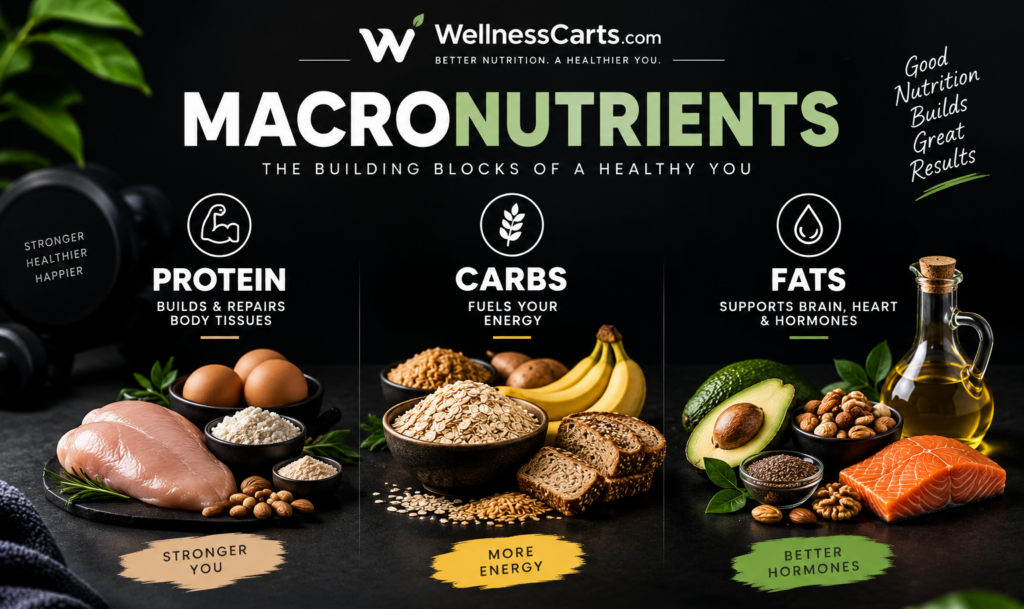
Every meal contains different nutrients that your body needs. Some nutrients are needed in larger amounts. These are called macronutrients.
The three main macronutrients are:
- Protein
- Carbohydrates
- Fats
Each one has a different role in your body. Learning about them can help you make better food choices and build more balanced meals.
In this simple guide, we will explain what macronutrients are, why they matter, and how to include them in your daily diet.
What Are Macronutrients?
Macronutrients are nutrients that your body needs in relatively large amounts.
The three main macronutrients are protein, carbohydrates, and fats.
They provide energy and help support many normal body functions.
You can find macronutrients in many everyday foods.
Protein: eggs, dairy, fish, chicken, beans, lentils, nuts, and protein supplements.
Carbohydrates: rice, oats, potatoes, fruits, vegetables, bread, and whole grains.
Fats: nuts, seeds, avocado, olive oil, dairy, fish, and other foods.
A healthy diet usually includes all three.


Why Are Macronutrients Important?
Your body needs different nutrients to work properly.
Macronutrients help provide energy and support normal body functions.
For example:
- Protein helps build and maintain body tissues.
- Carbohydrates are an important source of energy.
- Fats provide energy and help your body use certain vitamins.
This does not mean that one macronutrient is more important than the others.
Your body needs a variety of nutrients. The right balance depends on your individual needs, activity level, food choices, and overall lifestyle.
Protein: The Building Block of Your Diet
Protein is one of the most well-known macronutrients.
Your body uses protein to build and maintain tissues. It also plays a role in many normal body processes.
Common Protein Foods
You can get protein from many foods, including:
- Eggs
- Milk and yogurt
- Fish
- Chicken
- Lean meats
- Beans
- Lentils
- Soy foods
- Nuts and seeds
Protein supplements, such as protein powder, can also be a convenient way to add protein to your diet when needed.
However, protein supplements are not required for everyone. Many people can get enough protein from regular foods.
How Much Protein Do You Need?
There is no single amount that is right for everyone.
Your needs can depend on factors such as your age, body size, activity level, and overall diet.
People who exercise regularly may pay more attention to their protein intake, especially when trying to support muscle maintenance and recovery.
If you are unsure about your protein needs, a qualified dietitian or healthcare professional can provide advice based on your situation.


Carbohydrates: An Important Source of Energy
Carbohydrates are often misunderstood.
Some diets suggest avoiding carbohydrates completely. But carbohydrates can be an important part of a balanced diet.
Your body can use carbohydrates as a source of energy for everyday activities.
Where Do Carbohydrates Come From?
Common carbohydrate foods include:
- Rice
- Oats
- Potatoes
- Fruits
- Vegetables
- Bread
- Pasta
- Beans
- Whole grains
The quality of the carbohydrate source matters.
Foods such as fruits, vegetables, beans, and whole grains can provide carbohydrates along with other nutrients and fiber.
What About Sugar?
Sugar is also a type of carbohydrate.
Foods and drinks with large amounts of added sugar may provide energy but fewer nutrients.
This is why it can be helpful to choose nutrient-rich carbohydrate sources more often and limit foods with high amounts of added sugar.
Fats: More Than Just Energy
Fat is another important macronutrient.
Your body needs fat for several normal functions. Fat also provides energy and helps the body absorb certain vitamins.
Healthy Sources of Fat
Good food sources include:
- Avocado
- Nuts
- Seeds
- Olive oil
- Fatty
- fish
- Nut butters
Not all fats have the same nutritional value.
Choosing a variety of foods and including sources of unsaturated fats can be part of a balanced eating pattern.
This does not mean you need to remove all fat from your diet.

How to Balance Your Macronutrients
You do not need to calculate every gram of protein, carbohydrates, and fat to eat well.
A simple approach is to build meals using different food groups.
For example, a balanced meal could include:
Protein: grilled chicken, eggs, beans, or tofu
Carbohydrate: rice, potatoes, oats, or whole grains
Vegetables: broccoli, spinach, carrots, or other vegetables
Healthy fat: avocado, nuts, seeds, or a small amount of olive oil
You can adjust the foods and portions based on your needs and preferences.
The goal is not perfection. The goal is variety and balance.
Macronutrients and Exercise
People who exercise often pay special attention to macronutrients.
Protein can help support normal muscle maintenance and repair. Carbohydrates can provide energy for physical activity. Fat also provides energy and is part of a healthy diet.
Your needs can change depending on the type and amount of exercise you do.
For example, someone doing regular strength training may have different nutrition needs from someone who is mostly sedentary.
This is one reason nutrition advice should not be treated as one-size-fits-all.

Can Protein Supplements Help?
Protein supplements are popular among people who exercise and those who want a convenient source of protein.
Protein powders can be made from sources such as:
- Whey
- Milk
- protein
- Soy
- Pea
- Other plant proteins

Common Macronutrient Mistakes
1. Cutting out an entire macronutrient
Removing protein, carbohydrates, or fats without a good reason can make your diet less balanced.
2. Focusing only on protein
Protein is important, but your body needs carbohydrates and fats too.
3. Avoiding all fats
Fat is an important nutrient. The focus should be on making sensible food choices rather than avoiding fat completely.
4. Treating all carbohydrates as unhealthy
Carbohydrates come from many different foods. Fruits, vegetables, beans, and whole grains can all be part of a healthy diet.
5. Relying too much on supplements
Supplements can be convenient, but whole foods should remain an important part of your diet
FAQs About Macronutrients
What are the three main macronutrients?
The three main macronutrients are protein, carbohydrates, and fats.
Which macronutrient gives the most energy?
Fat provides more energy per gram than protein or carbohydrates. However, all three have important roles in the diet.
Is protein more important than carbohydrates?
No. Protein and carbohydrates have different roles. A balanced diet can include both.
Should I avoid carbohydrates?
Most people do not need to avoid carbohydrates completely. Nutrient-rich carbohydrate foods can be part of a balanced diet.
Are fats bad for you?
No. Fat is an important nutrient. Choosing nutritious sources of fat can be part of a healthy eating pattern.
Do I need protein powder?
Not necessarily. Many people can meet their protein needs through food. Protein powder may be useful when convenient or when it helps meet individual nutrition needs.
Can I eat all three macronutrients in one meal?
Yes. Many balanced meals contain protein, carbohydrates, and fats together.
Do athletes need more macronutrients?
People who exercise regularly may have different nutrition needs. The right amount depends on the type, intensity, and amount of activity, as well as individual factors.
Conclusion
Macronutrients are an important part of everyday nutrition.
Protein, carbohydrates, and fats all have different roles, and your body needs a variety of nutrients to support normal health and daily activity.
Instead of focusing on one nutrient, aim for balanced meals with a mix of nutritious foods.
Protein supplements can be a convenient option for some people, but they should support—not replace—a balanced diet.
At WellnessCarts.com, our goal is to make nutrition and supplement information simple and easy to understand. Learn about what you eat, understand your options, and make choices that fit your lifestyle.
Nutrition first. Better choices. Everyday wellness.